Zimbabwe is another tragic post-colonial African story. A peaceful transfer from British to African control was accomplished with Robert Mugabe guiding the country to a fairly bright future. Somewhere along the lines things took a turn for the horrible, however. Mugabe went from semi-moderate to radical. White farmers had property stolen from them, famine occurred due to mismanagement, homosexuals brutally attacked by government forces, and now inflation is somewhere around 15,000% a year (41% a day compared to 2.5% a year in the United States). Add onto the tragedy a HIV/AIDS infection rate of 24.6% and an average life expectency of under forty years.
Things are so bad in Zimbabwe that the Catholic Archbishop of Bulawayo, Pius Ncube, is calling for the United Kingdom to liberate the country by force. This from a man who is noted for his human rights and non-violence record.
Ncube knows the British colonial system made Zimbabwe. More importantly he knows the British left Zimbabwe washing their hands like Pilot. He is praying Britain realizes responsibility and gives Zimbabwe another chance.
Note: Another sad thing on Zimbabwe is how the other African countries treat it. South Africans Nelson Mandela and President Thabo Mbeki turn a blind eye to it. They realize the damage being done but are so anti-European they oppose intervention.
Friday, July 06, 2007


Thursday, July 05, 2007
Map of the Cultural Revolution

Praising Mao and his glorious anti-capitalist revolution. From Catholicgauze's personal map library. Gift from Lady of TDAXP.
In 1958 Mao Zedong started the Great Leap Forward. The GLF was intended to advance agricultural China to an industrial nation with a new culture. Two years and up to forty million dead later the GLF was ended.
The disaster hurt Mao greatly. Many in the Communist Party of China wanted him out. So Mao came up with a new plan. The Cultural Revolution was Mao's war on the party. Anti-Mao members were killed and local parities were reconstructed. The party became even more of a personality cult.
The first province to be purged was Heilongjiang in the very northeast of China. The bulk of the southeastern province experienced the revolution in early 1968. Xinjiang and Tibet in the far west of China were the last two provinces. There time came in early September of 1968.
Culture was once again attacked. Churches, temples, and schools were destroyed. Anything which would interfere with Mao becoming a secular god-king was viewed as old and needing to be destroyed.
The revolution ended along with Mao's life in 1976. It would take Deng Xiaoping to institute his own revolutionary ideals to make China into the power that it is today.
Wednesday, July 04, 2007
Declaration of Independence and its Legacy
Catholicgauze wishes everyone a happy Fourth of July! The Declaration of Independence was adopted 231 years ago today. Be sure to read it!
The ideals of people have the right to "Life, Liberty and the pursuit of Happiness" and "Governments are instituted among Men, deriving their just powers from the consent of the governed" have had massive impact on the world.
Domestically these statements led to the creation of a republican government on federal, state, and local level. The ideals feed into the abolition movement, the Civil War, and the liberation of the slaves. They continued on into the twentieth century with the Civil Rights movement. They are alive today in a wide range of issues ranging from abortion, immigration, and civil liberties. Elections are won and lost on these issues and the elected leaders change the course of history.
The American Revolution inspired the French Revolution. The downfall of the Ancien Regime in turn planted the seeds of republican revolution which would sweep across Europe and begin the end of classical Europe.
Even those who opposed the American Revolution were inspired by the ideals which were its foundation. Loyalists who fled after the war settled throughout the British Empire. These people brought with them theories on local governance while still being proud British citizens. Many settled in Canada where they became active in the political scene. Canada later became the first British colony to be granted limited self-rule in part due to the Loyalists' ideals. Canada proved to be a template for other colonies to gain independence from the United Kingdom.
Happy Independence Day and Happy Birthday Mom!
Tuesday, July 03, 2007
The Overlooked: Samaritans

The story of the Good Samaritan is what most people think of when they hear the word "Samaritan." The story was revolutionary at the time because a Samaritan, the outsider of the outsiders, was the only one to offer help to the wounded Jew. Today many people do not know what a Samaritan is or that Samaritans continue to live today.
Location
There are only about 705 Samaritans left. About half of them on the outskirts of Nablus and the other half lives in Holon near Tel Aviv.
Culture and Religion
Samaritans share the same lineage as Jews. However, they claim to be the true keepers of the faith and culture of the ancient Israelites. Their religion, Samaritanism, is based on the written Torah (Genesis to Deuteronomy) but with a different version of the ten commandments. The last commandment is expanded to include God declaring Mount Gerizim the holy spot of Israel. It is this commandment which gives Samaritans religious justification to its construction of their holy temple on Gerizim. Samaritans believe Moses was the last prophet (the other prophets of the Old Testments are fictional according to the Samaritans). Another difference to present-day Judaism include the Samaritans continued use of a priesthood and denial of the Talmud and any rabbinical law.
History
It is known that Samaritans came from the northern tribes of ancient Israel. No one knows exactly when Samaritans and Jews separated from each other. It was once believed the Samaritans intermixed with invading pagan groups but this theory has fallen out of favor. Whatever the reason, by the end of the fourth century BC the split was finalized. The Jews had their temple in Jerusalem while the Samaritans had their's forty miles away on Mount Gerizim.
During Greek occupation the Samaritans were relatively well off. However, while external persecution was light some Samaritans embraced Greek culture. Things changed when the Maccabeean John Hyrcanus conquered Samaritan lands and destroyed their temple.
The Roman era was a mixed time for the Samaritans. The Samaritans were not granted the same special exception of religious freedom that the Jews received. The Samaritans were forced to offer sacrifices to the Roman imperial cult. The local Jewish leaders kept up persecution on Samaritans who became virtual untouchables. After the failed Jewish revolts against Rome, things changed somewhat. Samaritans were allowed to rebuild their temple. The Samaritan leadership made the effort to constantly remind the Roman authorities that Samaritans were not like the "troublesome" Jews.
The Christian empire was no friend of the Samaritans. Religious oppression led to failed revolts against Emperor Zeno and Justinian I. The temple was destroyed again. Justinian I allied with the Christian Ghassanid Arabs to crush the last Samaritan revolt. Tens of thousands of Samaritans were killed or forcibly converted. It was a blow that the Samaritans would never recover from.
The Islamic Era was one of attrition. Samaritans were granted People of the Book (Dhimmi) status. Many of the remaining Samaritans converted over time to end the economical and social oppression against them.
Today
Despite their history and being in a geopolitical powder cake Samaritans have managed to reach an equilibrium. They keep their faith while sending the children to either Israeli or Palestinian schools for secular education. The close knit group official remains neutral on the complex political issues that everyone else has strong opinions on.
The religious ceremonies held by the Samaritans are now open to religious tourists. Tourism has brought in money which the Samaritans have used to improve themselves. There is no current effort to rebuild the temple but all temple functions including sacrifice continues. The videos below documents the Samaritans' Passover celebration near Nablus.
With such a small community there are fears of interbreeding. So men are allowed to marry someone outside the faith as long as they convert. Recently the Samaritans contracted with a Ukrainian agency to find brides for two members.
There is no one external threat to the Samaritans currently. However; by being such a small group in such a dangerous area, any disaster could destroy the Samaritans chance for a future.
Additional Resources
Wikipedia Article on Samaritans
The Samaritan News - Defunct newsletter on Samaritans
The Samaritans - Everything you ever wanted to know about the Samaritans... ever
The Samaritans' Newsletter - Updates on the Samaritans
Monday, July 02, 2007
Independence Knocking on Kosovo's Door
Kosovo is currently a Serbian province under the jurisdiction of the United Nations and protection of NATO forces. While everyone agrees on what the current status of Kosovo is, no one can agree on what Kosovo's future will hold.
The United Nations plan for Kosovo's independence has been a long time coming. There is one thing standing in the way of a future ethnic Albanian state: Slavs. The Slavish Serbs in Kosovo deeply oppose separation from Serbia. They fear that a free Kosovo would join Albania The Serbs point to the fact that the current Kosovar military and local government uses the Albanian flag and Albanian national anthem. The international community is trying to make the ethnic Serbs feel included but little is likely to result from the effort.
The greater Slavic opposition comes from the "big brother" of the Serbs: Russia. Russia deeply opposes anything that would damage the Slavish image. Russia has threatened to veto any United Nations resolution granting Kosovo its independence. Stratfor recently published an article on how there are fears Russia would repeat itself by sending troops into Kosovo to stop independence. This action could potentially cause a rebirth of the Kosovo Liberation Army (whose "former" members now are in the Kosovo Protection League). If this happends expect Chechnya in Europe.
The situation in Kosovo is not clear cut. On the one side you have the ethnic Serbs whose government engaged in ethnic cleansing and picked the wrong side in the geopolitical arena. The ethnic Albanians on the other hand engaged in terrorism, formed alliances with Muslim terrorist groups, and after the Kosovo war launched an attack on Serbia.
For now the status of Kosovo is in the war, an internet war with YouTube videos battling it out continues, and a world awaits. The "international community" backs independence, Moscow's neo-satellites oppose, and Kosovo is the pawn.
Sunday, July 01, 2007
The Holocaust of Women
Six million Jews and five million other "undesirables" were murdered by Nazi Germany during the Holocaust. The world realized too late the horror of what was going on and even today tries to learn from what occurred and vowes "Never Again."
Unfortunately today genocides and other killings continue with very little action. One of the bloodiest actions is a rarely reported war against women. A recent study by the United Nations population fund states sixty million (60,000,000) females are "missing" from Asia. Abortion is the number one killer where pre-birth sex screenings give people like the Chinese and Indians the oppurtunity to prepare an abortion against "worthless" girls who bring nothing to a traditional family. India especially has problems with the dowry system. The system makes have girls a financial and cultural burden on a family. Up to half a million girls "disappear" each year in India.
The trends are frightening. In some areas of China there are 130 men for every 100 women. This leaves twenty-five to thirty million men in China without a bride creating a formula for violence. The sex-slave trade of women has also increased. Hindu girls from neighboring countries are being smuggled into India to serve as brides for men who cannot find local women to marry.
This holocaust is truly global in its reach. The Balkan countries in Middle American Hispano nations are seeing an increase in the use of abortion against girls. The trend is even reaching America where traditional emigrant families from China, India, and elsewhere still see girls as more of a burden and use America's liberalized abortion laws to "take care of the problem."
Representations of Indians and US Army along the Oregon Trail: Western Nebraska to Fort Laramie
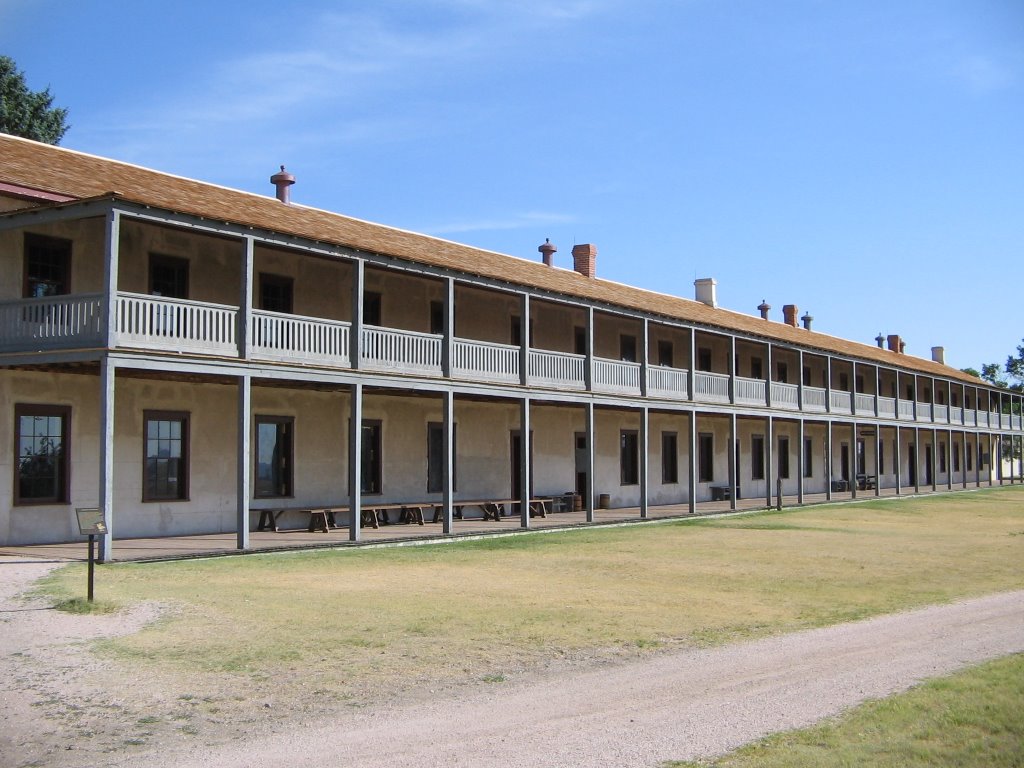
Continuing on past Ash Hollow one drives by Chimney Rock and Scotts Bluff. Here there are museums dedicated to the
In
The last stop in the Great Plains section of the Oregon Trail is
The history of
Indian and emigrant relations were good for the most part during the time frame of the
Unfortunately a great tragedy occurred in
Just as the historical archives record more tragedy then positives, so does the landscape. The Grattan Massacre site is marked by the
“No One is Home” monuments are also common. The majority of signs at the fort are dedicated to the army. Some places have markers discussing the overland trails. Other monuments are dedicated to army wives and teamsters. One information sign, Fort Laramie and the Western Movement, prides
Thus ends the study area of the Great Plains of the Oregon Trail. It was a long journey and one Catholicgauze is glad to have done.
Subscribe to:
Posts (Atom)